Use Signal – Why we ditched WhatsApp and switched to Signal
Why Noiz abandoned WhatsApp for Signal: WhatsApp's data collection and backdoor concerns versus Signal's open-source, default end-to-end encryption.

What’s wrong with WhatsApp?
WhatsApp is one of the most popular instant messaging platforms, owned and developed by Meta (formerly Facebook). It uses the Signal protocol for its alleged end-to-end encryption. However, Noiz identifies several major issues:
WhatsApp is not truly end-to-end encrypted
According to an anonymous interview between Noiz’s founder and a law enforcement official, Meta provides specific port access that allows law enforcement worldwide to access and read user messages, listen to calls, and collect various device data. This backdoor access violates individuals’ privacy rights and exposes users to broader cyberattacks.
WhatsApp collects excessive data
WhatsApp’s privacy policy reveals extensive data collection: access to all device media (photos, videos, audio), location history, contacts, facial photos, camera and microphone access, and more.
The author invokes Edward Snowden’s perspective: “Saying you don’t care about privacy because you have nothing to hide, is like saying you don’t care about free speech because you have nothing to say.”
The core concern involves state-sponsored propaganda delivered through behavioral and psychological profiling. This data enables curated political messaging designed to exploit emotional vulnerability and cognitive bias.
The solution: Use software that encrypts communications by default and collects only necessary operational data.
Why Signal is better for privacy
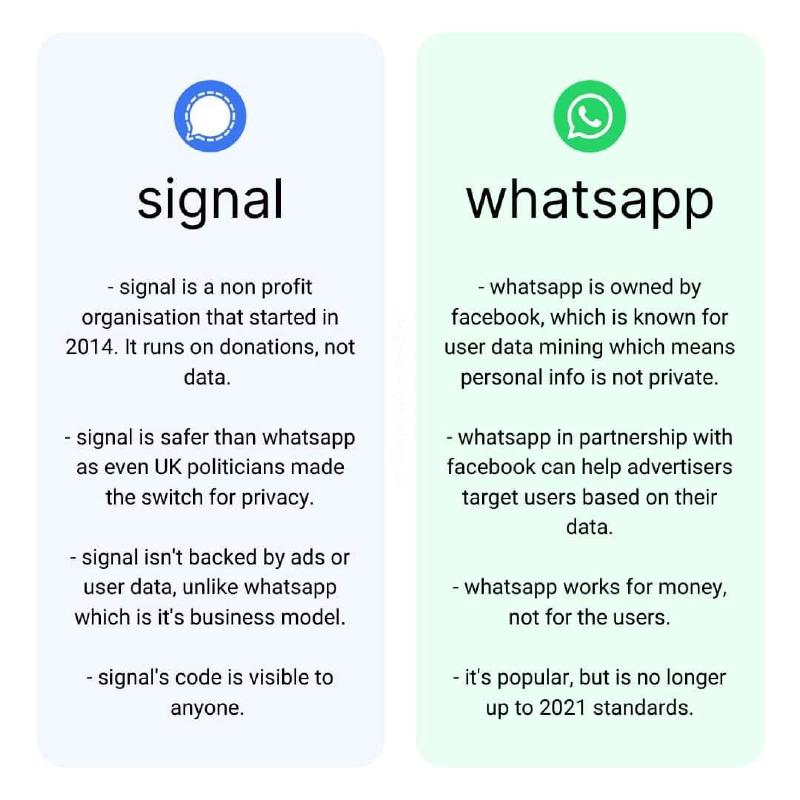
Signal messenger provides end-to-end encryption by default, collects minimal data, and operates with open-source code—making backdoor access highly unlikely.
Who should care about privacy
While most people prioritize convenience over principles, privacy protection matters for journalism, activism, intellectual property, and human rights work.
Signal recently introduced usernames as unique identifiers instead of requiring phone numbers only. This enables pseudonymous communication while building trust over time without revealing true identity.
Signal is open source
Signal’s source code is available for public analysis. Client applications use GPLv3 licensing; server code uses AGPLv3. This transparency makes security auditing possible and reduces vulnerability likelihood.
Conclusion
Noiz committed to using freedom-respecting, open-source technologies that protect user privacy. This commitment necessitates abandoning WhatsApp for Signal messenger.
For information, visit https://signal.org.
Editor’s note
Noiz receives no financial benefit from the Signal Foundation. The company donates monthly to support the project’s maintenance and secure the future of encrypted communications.